Monday, 11 February 2008

Of Mice and Men, and Whales and Cows and Cod


As you're perhaps aware, the issue of whaling has once again reared its head in the South Pacific. This is because Japan (like Norway, Iceland, Russia, and some other countries) has continued to hunt whales in small numbers despite the worldwide moratorium; it does this lawfully by killing the whales for supposedly 'scientific purposes' and then allowing their meat to be sold 'once research is finished'. (The Moratorium was started in the early 1980's essentially to collate data on whale populations in order to examine the damage done by whaling, so there remains a loophole for scientific research purposes.) It's a fiction, but it allows whaling to continue at a basically sustainable level. (For example, in 2005 Japanese whalers took 100 Sei Whales, 10 Sperm Whales, 50 Humpback Whales, 50 Fin Whales, 50 Bryde's Whales, and around 850 of the common Minke Whales. It is estimated that the worldwide population of the latter is just under a million.) Australia in particular objects to this, which is what the recent broohaha has been all about.

I've never particularly understood the moral objection to whaling which seems to motivate most Anglo populations in the world. (When it comes to animal rights, the UK, US, Australia and New Zealand are easily the most strident and simultaneously intellectually confused.) Whales are animals like any other, and if you're going to eat beef or pork there's really no moral difference to eating whale; in fact the latter is arguably more ethically sound in that whales live free and have rather nice lives until they're caught and eaten, unlike most farmed cows and pigs. The fact that whales are intelligent and 'majestic' or 'beautiful' (a commonly cited reason for the objection) shouldn't make a difference: the implication of such an argument is that it's only okay to kill and eat species that are 'stupid', like cows, which is inconsistent and illogical; a creature has as much right to life, surely, however stupid or intelligent it is - we abandoned that sort of categorization for humans a century or more ago. (And anyway we shouldn't base such decisions on subjective opinion - I happen to think cows are rather beautiful animals too, although strictly in the platonic sense.)
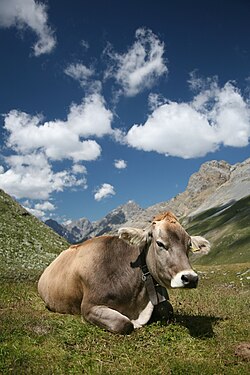
Ain't she gorgeous?

So if you're going to eat any meat at all, whales should be included. Of course, a vital caveat is that any hunting ought to be done sustainably. In that sense whales are like any major commercial fish species, like cod: there's no point in eating them to extinction, because that would cause irreparable damage to ecosystems and result in no more good eating. Most countries that practice whaling are well aware of this, which is why indigenous groups in Canada and Alaska carefully monitor whale populations in their areas to ensure positive growth even as they hunt. It is also why even Norway, the most ardent disciple of whaling in the world and the only country which absolutely rejects the international moratorium, restricts itself to a very small catch each year. Whales are actually comparatively easy to fish sustainably; it's simple to measure how many are being caught, unlike cod, and there's no chance of accidental overfishing (or, incidentally, the accidental catching of unwanted species as by-catch) because nets aren't used, only harpoons. Whale meat is also, I can personally attest, reasonably tasty. Rather like beef, although eaten as sashimi it is more like corned beef.

I would have more respect for Greenpeace and other environmentalist groups (and the Australian government) if they lobbied commercial fisherman with equal stridency (throwing stinkbombs, illegally boarding their ships, spraying graffiti) as they do Japanese whalers. But they don't. Funny that. The inescapable conclusion is that it all just comes down to that most ridiculous of prejudices: fish are slippery and slimy and ugly; whales are beautiful; so people can only get worked up about the hunting of the latter.
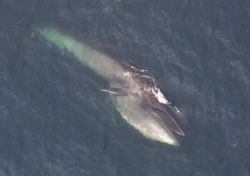
Dinner.

(NB: I feel it necessary to reiterate my fundamental opposition to unsustainable hunting or fishing of any kind. I believe that all fishing should be carefully monitored and all fisheries strictly managed. I include whales in this. [Whales aren't fish, strictly, I know. Neither are shrimp or lobsters. But the principle is the same.])

Sunday, 10 February 2008

Unfunny Puns


Japanese humour is rightly considered weird. (When I first arrived in Japan back in March 2003, I remember about two days into my stay being sat down in front of the TV by my American flatmate and told to "Watch and learn." Together we sat drinking shochu and watching a guy dressed in a cockroach outfit repeatedly taking running jumps into giant toilet bowls filled with confetti while an audience of hundreds laughed hysterically. And it was funny. But weird too.)

However, one thing the Japanese and the British in particular share is a love of puns. Japanese is a language perfectly suited to the pun, because the number of distinct sounds is so small - with the consequence that similar sounding words are very common. It's difficult to explain examples if you don't know the language, because puns are so language-specific. Last night though, Ijuin-san came through our communal kitchen area, noticed we were cooking hokke, a kind of haddocky fish, and immediately said, "Hokke o Hott-okke!" ("Leave that haddock alone!") That's a typical example; you can probably appreciate at least the pleasing congruence of sound and meaning.

One other similarity between the Japanese and British is that we love puns, but we're also ashamed of them - as if we know they're a deeply boring and ridiculous form of humour but we're unable to stop it. Interestingly, when somebody in Japan or Britain makes a pun the reaction of the surrounding people is exactly the same: everybody groans and tells the punner to f--- off (in the case of Britain) or that they're an oyaji [old fart] (in the case of Japan), while at the same time chuckling at the joke.

In fact I think the point of the pun isn't really to make people laugh; it performs the function of uniting the group in condemnation of the pun and hence promotes group cohesion by being an ice-breaker. In societies such as Britain and Japan, where people are quite reserved, such things are important in keeping the juices of interpersonal relations flowing.

Friday, 8 February 2008

Cutlery Customs

I'm not actually sure if I've mentioned it on the blog before, but one of my plans post-PhD is to spend a good few months travelling around the US. I've never been to America before, and there are just so many places that I would love to go, cities, wilderness, national parks, mountains, glaciers... At the moment I'm reading (well, skimming certain parts - like I really need to know right now what the best B&B in the Hamptons is) through the Lonely Planet USA guide, which weighs in at over 1200 pages just to try and get some more concrete ideas of things that I might want to do and get an idea of distances.

I came across something in the cuisine and eating section though which made me stop and re-read it just to make sure that I had read it right. The following was in a separate piece on cutlery etiquette:

"The method for holding cutlery seems extremely complicated at first: hold your fork in your right hand, and rest your left hand in your lap. When you need to use a knife, switch your fork to your left hand and cut with your right. Or just eat European-style - it won't be considered rude unless you rest your left hand on the table."

The idea of switching knife and fork seemed a little weird - everyone I know or have ever met seems to hold on to both at the same time - is that European-style? I don't know, it never occured to me that there was a "style" about how you use your cutlery.

The big question from me to you, dear American readers, is to ask why it would be rude if I rested my left hand on the table? Thinking about it, it doesn't feel like it would be a comfortable position, but then I wouldn't normally think about resting it in my lap whilst eating either, so what do I know?

Any illumination on the subject would be appreciated! More on my possible travel plans as time moves on and I have a clearer idea of when I'll actually be finished with my PhD. This weekend I'm planning to correct two of my chapters, and forge ahead with another one - but first I have to do my six hour marathon of marking this evening...

Muslims and TVs


One thing I've noticed is that civil liberties and personal freedoms have as much a tendency to promote deep conservatism as they do liberalism.

For example, the Archbishop of Canterbury has recently advocated allowing British Muslims to live under Sharia law. (I know. I can't even be bothered explaining how depressing that thought is, for a whole host of reasons too horrible to catalogue here and which the reader is probably well aware of. Suffice to say: I fear my my country's future.) This is ostensibly a drive for religious and cultural freedom - allowing people to live the way they want to live, according to their customs - but it can only lead to the highly illiberal situation wherein each ethnic or minority group maintains its own culture, legal system, language and genetic purity without any form of crossover with other groups. Separate law regimes are the first step to complete societal fragmentation.

It's also profoundly undemocratic. The point of democracy is that, basically, decisions are determined by the wishes of the majority. If we're going to have a democracy in Britain at all, then we ought to take it seriously enough to go for it 100%, and that means having a democratically determined universally applicable legal system too.

So a superficially wishy-washy liberal stance ends up being anything but.

The Great Man Himself.

Thursday, 7 February 2008

We're Doomed

The British on the whole like a nice little chuckle every now and then at our American cousins (stick with me on this people!). It's a fun little pastime, you know what I mean: statistics about how many US citizens don't know where Iraq is, or video footage showing the "average American citizen" failing at basic knowledge of the world... Over the pond we all have a laugh and congratulate ourselves on being smart.

Sigh.

"A new survey reveals that a quarter of Britons believe Winston Churchill never existed..."

Sigh.

I can't wait until the cockroaches evolve some more and take over...

Super Tuesday vs. London


I sometimes worry about whether the internet is really a good idea or not, but I never have those worries while I'm using it to listen to the BBC. Funny that.

Anyway, part of the fun of living in Japan is being able to listen to all the weird and wonderful nonsense that's on at 3am GMT while I'm having lunch; at the moment, for instance, I'm being filled in on the ins-and-outs of gyroscopic effects within cars and the life span of lead-acid batteries by a radio-phone in on Radio 5 live. (Apparently, our battery technology "still sucks". I know. I'm concerned too.)

Last night though, I was able to listen live to all the Super Tuesday results as they came in, with a whole host of illustrious analysts and experts commenting on it. Interesting stuff. I hate all that "leader of the free world" guff that always gets trotted out when American democracy comes under discussion, but the system certainly is more 'democratic' than the British one in that we don't get the chance to have anything other than a very indirect say in who will be our prime minister. Then again, I'm not sure that's a disadvantage; voting directly for an individual might just mean that the richest and/or most charismatic person becomes president, which isn't necessarily conducive for good policy.

One of Jeremy Vine's questions to his listeners yesterday was why Super Tuesday is such big news in the UK when a London Mayoral election is coming up soon; shouldn't the latter be occupying more news space? There was almost a tone of peevishness in his voice. Well, the answer, for me personally, is that I don't give a shit what happens in London because I've never lived there and hate the place, whereas who becomes president of the US is of at least some importance in my life. Regardless of the merits or otherwise of British democracy, one thing I can say is that a major disadvantage to life in the UK is that London is so dominant a media and cultural centre that Londoners seem to look on the rest of the country as an extension of its suburbs; they find it difficult to comprehend that somebody living in, say, Manchester, has as much interest in the London Mayoral election as they do in the life span of lead-acid batteries.

But the President of the US can start a nuclear war if he wants to. That means I have at least some level of vested interest in who he (or she) is.

Wednesday, 6 February 2008

After(math)

The talk went pretty well in the end I think. I was a little rushed for time in the last third of it, and if I could go back I would make some changes to how it all flowed, but for the most part I was happy with how it went, and my friend (who invited me to give the talk) thinks that it went over well.

I was filmed while I was doing it, as they want to produce a DVD of all of the talks to the school maths club this year, so in a couple of months time I could have my own little memento of the occasion!

The thing that was a real drain was the travel; First Class on a Virgin Pendolino train is nice, people bringing you food and drink, decent sized seats, a paper to read - it's just great. But I worked out this morning that I was at the school for a little under two and a half hours yesterday, and in total I was travelling for the best part of eleven hours. Long, long day. Got some work done on the train on the way down, but on the return journey I was just too tired. Ended up reading my Lonely Planet USA guide for a while, and doing all of the puzzles in The Times (I say with all modesty, that even tired I still rock at puzzles...) while listening to Sufjan Stevens.

Cloverfield was good: I thought it was a genuinely original take on the monster movie, cleverly told, excellent effects. The decision to film it and present it as though it was camcorder footage was great, it really added something to the feeling that you were there: a story like this centred around just average people would have been interesting, but then to literally see it all, the confusion and the chaos, from their perspective was a good move on the part of the filmmakers.

More soon, I read a bizarre little story in The Times yesterday that I want to share, and also I have a question to ask of our American readers...

Monday, 4 February 2008

Interim

I'll be back to blogging on Wednesday, have just been going crazy trying to get this talk ready. It is ready now, and I'm giving it tomorrow afternoon. I'll let you know how that goes!

Leaving in about fifteen minutes; off to see "Cloverfield" and then get some dinner, which seems like a good way to relax given how frenzied the last few hours have been as I've been making my prompts and tweaking my slides.

Have about a third of my goals for "101 Things..." as well. As I've said before, suggestions are very welcome!

More soon.

Films on a Plane


For a while I've been meaning to start reviewing films, books, music etc. in the blog. Well, let's start with the selection of films I watched on the plane coming over to Japan the other week. (I never even bother trying to sleep on planes anymore.)

3:10 to Yuma starring Christian Bale and Russell Crowe. A good old-fashioned cowboy yarn to get going, with some well-made action sequences and excellent performances from the entire cast. (Then again, I don't think I've ever seen either of the stars give anything less than 'excellent'; this film was meat-and-drink to them, giving them the opportunity to do their job well without really challenging them enough to drive them onto truly great performances like, for example, Crowe in The Insider.) The plot was the main weakness: it's basically a slight rhapsody on a theme set in the earlier Jimmy Stewart vehicle The Naked Spur, which was a better film, I think, in the complexity of the relationships it develops and the moral ambiguity of its hero and villain. 3:10 to Yuma has both of those, but to a lesser degree.

The Life Aquatic with Steve Zissou starring Bill Murray and Owen Wilson. Wes Anderson is my favourite director so I've seen this one three or four times before; it still never fails to entertain. Unaccountably it was critically panned and did poorly in the box-office, but I'm sure time will work in its favour and it will come to be regarded as the quirky classic it is. I've read reviews of Anderson films who accuse him of being fay and eccentric and superficial. I've never found that: all of his pieces have a core of genuine emotion to them, especially regarding family relationships, that is often highly perceptive and moving. The budding father-son bond that Murray and Wilson develop over the course of this film - between a man who never wanted children and another who desperately wants a father - is honestly played out in pitch-perfect performances.

The Darjeeling Limited starring Owen Wilson, Adrien Brody and Jason Schwartzman. This was the pick of the bunch, for me: another Wes Anderson film, and one that explores familiar themes as three estranged brothers travel across India to find their mother and ask why she didn't attend their father's funeral. It was advertised as a comedy and has its humourous moments, but in fact it's probably Anderson's most serious film so far - with a maturity of tone that he hasn't shown before. (Death is a major theme, and is treated with tenderness and warmth.) And I think Adrien Brody must be the most watchable actor around - with a fantastically expressive face and voice - he's a welcome addition to the familiar Wes Anderson 'team'. I also have to say it's nice to see India portrayed in a sympathetic but not fawning way; the India of The Darjeeling Limited is a very human one, and the 'spiritual journey' aspect - of Westerners going to 'discover' the mysterious East - is nicely punctured rather early on.


The Bourne Ultimatum starring Matt Damon. I've seen this one before too, and probably needn't say anything more than, if you haven't seen it yet, firstly why not? and secondly do so as soon as possible. It's set the bar for the spy-thriller action-film genre so high that it's difficult to imagine it getting much higher: the latest Bond chapter will have to be something really, really special if it's to even compete.

Friday, 1 February 2008

Ant Soldiers


For people in America and the UK, the Second World War usually means 1941-1945 or 1939-1945 respectively. For East Asians, though, the group of conflicts making up the Second World War really started in the 1920s, and didn't finish until the mid-1950s. The Pacific War between the US and Japan and the Burmese campaigns involving Britain were really only chapters in a wider story.

I was reading in the Asahi Shimbun today about the Japanese soldiers who stayed on in the former occupied territories after 1945 in order to continue the war. Hard to believe that anybody would want to, but I've already talked before in this blog about soldiers becoming enamoured with fighting. What I hadn't known was that at least 20,000 and probably more than 30,000 Japanese soldiers chose to remain in China and fight on after the war officially ended in September 1945. Most sided with the Kuomintang, but extraordinarily many also joined the Communist forces under Mao Tse-tung. They were reknowned for their fighting ability throughout both warring parties: according to the article Hu Pin, a former soldier for the Communists who was involved in the hunting down and killing of 20 Japanese Soldiers in 1948, remembers that "Unlike [the Kuomintang soldiers], they did not surrender easily. Some of them pretended to give up their weapons and then launched a counterattack...still, I could not understand why Japanese soldiers were staking their lives [for the Kuomintang]."


Japanese Soldiers, Shanxi, 1948.

It's hard for us to understand either. The Kuomintang and the Japanese Army had been fighting each other ferociously for over a decade; why did so many Japanese soldiers join their hated enemies so readily and fight and die alongside them? We can only wonder - the Second World War was only sixty or so years ago, but already it has the feel of an utterly different era. We understand people from that time's motives about as readily as we do the motives of ancient Sumerians. Again I find myself thinking that some men really do enjoy fighting.

Anyway, a new docu-film, Ari no Heitai (Ant Soldiers), deals with this very topic. It was released last September in Japan; hopefully I'll be able to track it down and report back over the next few weeks.